FLICKR LINK: https://flic.kr/p/2svzM7r
PORTRAIT: BIRTHDAY AT CROSSRAIL PLACE
Scene Setup
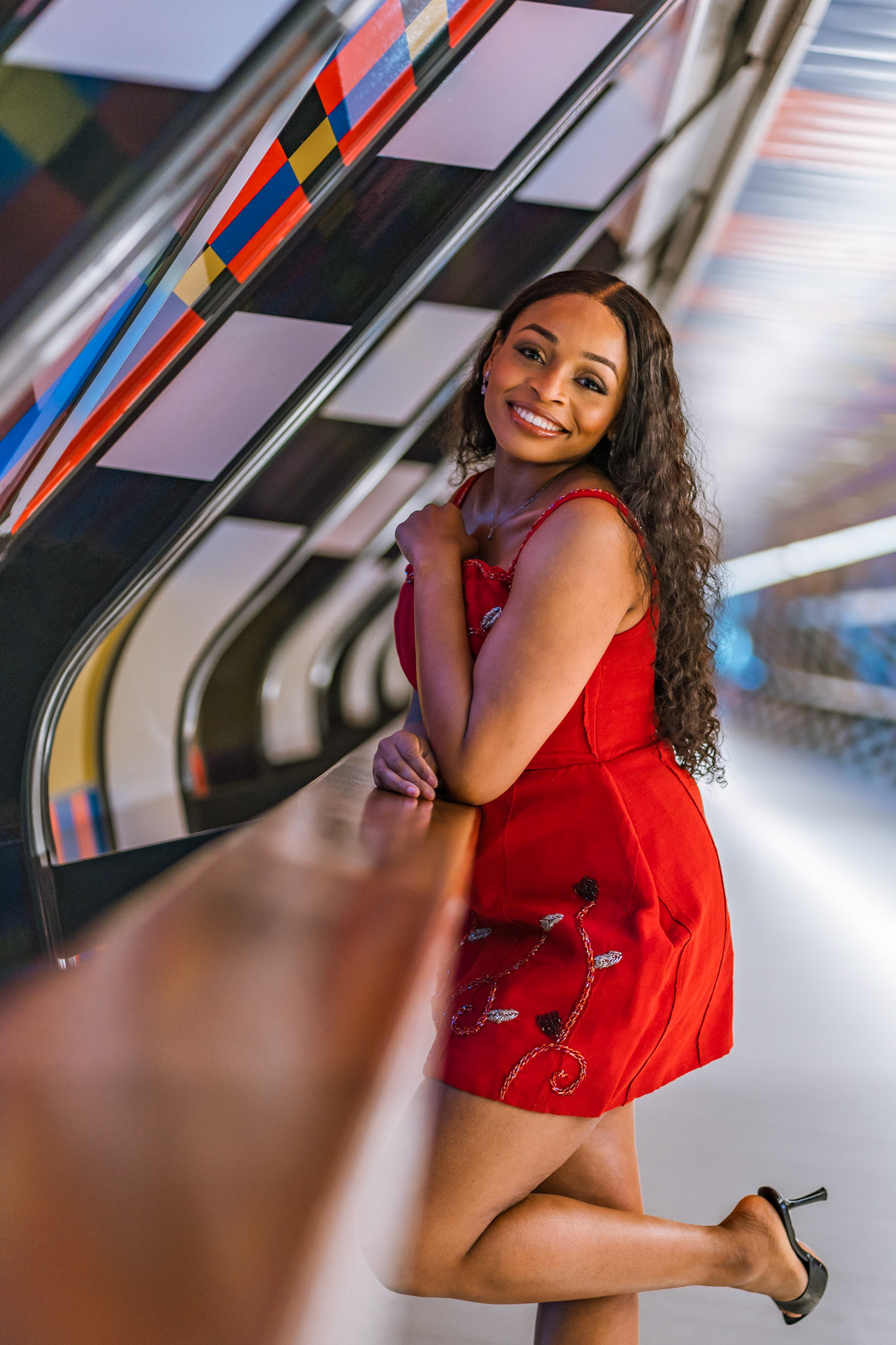
I photographed the model at the Crossrail Place tunnel in Canary Wharf. My intention was to create a joyful environmental portrait showing a beautiful woman celebrating her birthday. I chose this location because its colourful panels, reflections and repeating lines supported the vibrant and celebratory mood.
I positioned her beside the reflective surface and photographed from a low angle. I used the Sony 85mm lens at f/1.8 to separate her from the background while retaining enough architectural detail to establish the location. My main focus point was her nearest eye. The 1/125 sec shutter speed captured her pose sharply, while ISO 500 allowed me to work with the available light.
Observations
Her expression is the most important feature of the photograph. Her direct eye contact and smile communicate genuine happiness and confidence. Her turned body, relaxed arms and lifted leg create movement and prevent the pose from feeling static.
The composition uses diagonals, repetition, reflection and colour harmony. The tunnel lines travel through the frame and direct attention towards her. Her red dress connects with the coloured panels above, while the blues and neutral tones provide contrast. The blurred reflection on the left creates depth and adds another leading element.
I placed her towards the right side of the composition rather than centrally. This allowed the architecture to remain part of the story while giving her enough visual importance. The shallow depth of field keeps her eyes and face sharp while reducing the prominence of more distant details.
Why I chose this image
I chose this photograph because it records both her appearance and the emotion of her birthday. The smile feels natural, the red dress gives the image energy and the location makes the portrait visually distinctive.
What I could improve
If I repeated the portrait, I would experiment with a small reflector or soft fill light to create more even illumination across her face. I would also try a second viewpoint with slightly less bright background space. In the final edit, I used a tighter crop, balanced the skin colour and reduced the influence of the brightest background areas.
Why I chose this image
I chose this photograph because it records both her appearance and the emotion of her birthday. The smile feels natural, the red dress gives the image energy and the location makes the portrait visually distinctive.
What I could improve
If I repeated the portrait, I would experiment with a small reflector or soft fill light to create more even illumination across her face. I would also try a second viewpoint with slightly less bright background space. In the final edit, I used a tighter crop, balanced the skin colour and reduced the influence of the brightest background areas.
EQUIPMENT USED
Sony A7C II
Sony FE 85mm F1.8
Sony FE 85mm F1.8
CAMERA SET UP
Set the Camera Mode to Manual
Set the focus length to 85mm
Set the shutter speed to 1/125s
Set the aperture to F1.8
Set the ISO to 500
Set the focus length to 85mm
Set the shutter speed to 1/125s
Set the aperture to F1.8
Set the ISO to 500
85mm - 1/125s - f1.8 - ISO 500
FLICKR LINK: https://flic.kr/p/2svxHt9
LANDSCAPE: ST. PAUL'S CATHEDRAL
Scene Setup
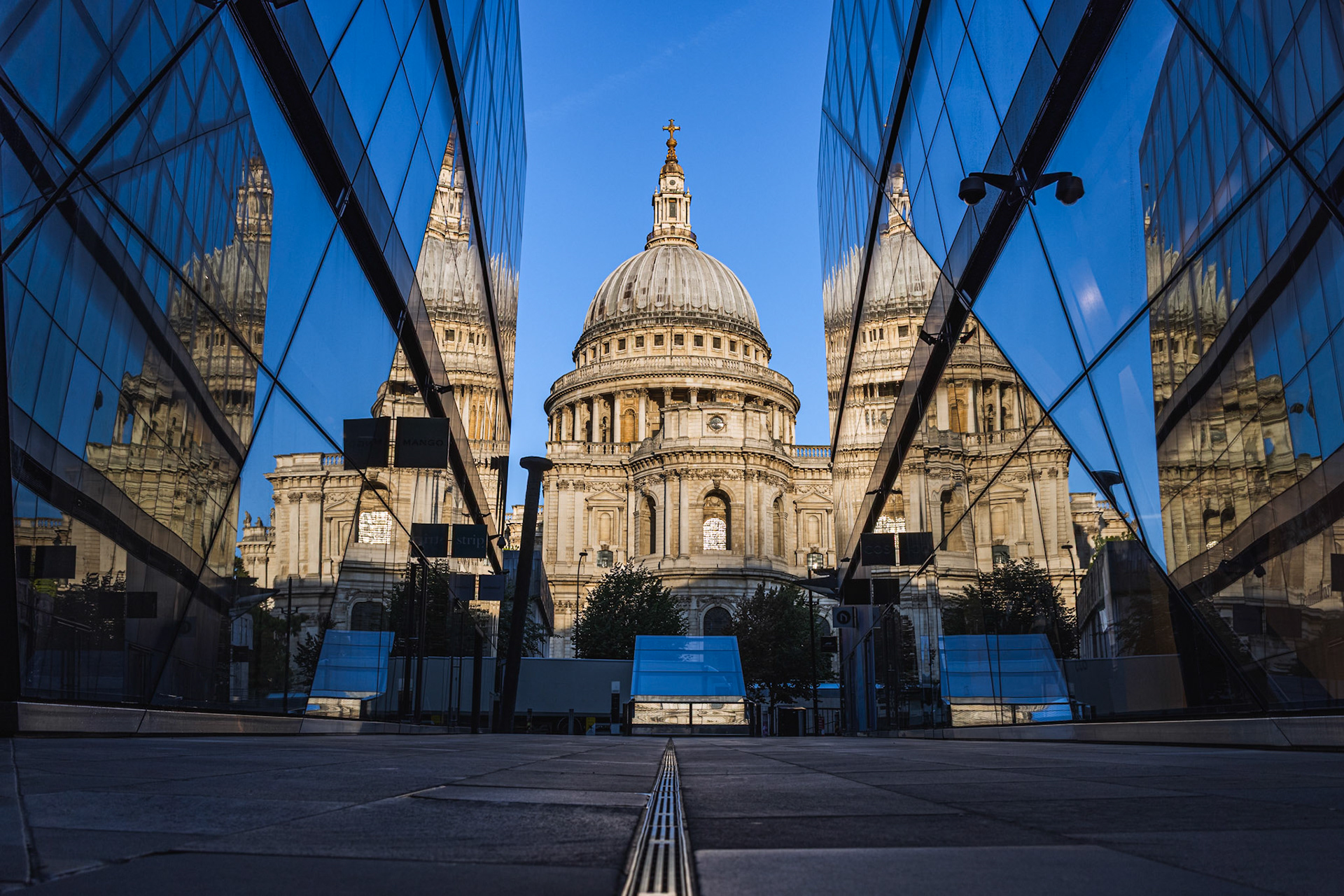
I captured this photograph early in the morning at One New Change in London, looking towards St Paul’s Cathedral. It was the morning of the recent London eclipse, which made the occasion particularly special. I arrived early so that I could work carefully before the area became busy and find a viewpoint that combined the historic cathedral with the modern glass architecture around it.
I used a 24mm focal length to include the cathedral, its reflections and the foreground. I placed my focus on the architectural detail of St Paul’s and selected f/8 to maintain sharpness across the scene. A shutter speed of 1/250 sec and ISO 100 gave me a clean, detailed exposure.
I chose this photograph because it represents planning, timing and a distinctive view of London. The eclipse morning gave the experience additional personal meaning. I also like how the photograph places old and new London together, showing the cathedral framed and multiplied by contemporary architecture.
What I would improve
If I photographed this again, I would check the top edges more carefully for small fixtures and other distractions. I would also experiment with a slightly lower viewpoint while preserving the foreground leading line. In editing, I reduced the blue intensity and balanced the foreground so that the colour remained striking without overwhelming the cathedral.
The cathedral is the main focal point, while the glass buildings create a frame within the frame. The repeated reflections introduce rhythm and allow the historic architecture to appear several times across the composition. The drainage channel in the foreground acts as a leading line that directs the viewer towards the dome.
I chose a largely symmetrical composition because the scene was naturally suited to balance and repetition. The diagonal edges of the buildings converge towards the centre, strengthening the cathedral’s visual importance. The cooler blue glass contrasts with the warmer stone and helps separate the subject from its surroundings.
I paid close attention to keeping the cathedral upright, preserving highlight detail in the stone and maintaining visible information in the darker foreground. The photograph remains sharp from the foreground architecture to the cathedral.
Why I chose this shotI chose this photograph because it represents planning, timing and a distinctive view of London. The eclipse morning gave the experience additional personal meaning. I also like how the photograph places old and new London together, showing the cathedral framed and multiplied by contemporary architecture.
What I would improve
If I photographed this again, I would check the top edges more carefully for small fixtures and other distractions. I would also experiment with a slightly lower viewpoint while preserving the foreground leading line. In editing, I reduced the blue intensity and balanced the foreground so that the colour remained striking without overwhelming the cathedral.
EQUIPMENT USED
Canon R5
Canon RF 24-70mm F2.8L
Canon RF 24-70mm F2.8L
CAMERA SET UP
Set the Camera Mode to Manual
Set the focus length to 24mm
Set the shutter speed to 1/250s
Set the aperture to F8
Set the ISO to 100
Set the focus length to 24mm
Set the shutter speed to 1/250s
Set the aperture to F8
Set the ISO to 100
24mm - 1/250s - f8.0 - ISO 100
FLICKR LINK: https://flic.kr/p/2svykDY
FREE CHOICE: ANTELOPE CANYON
Scene Setup
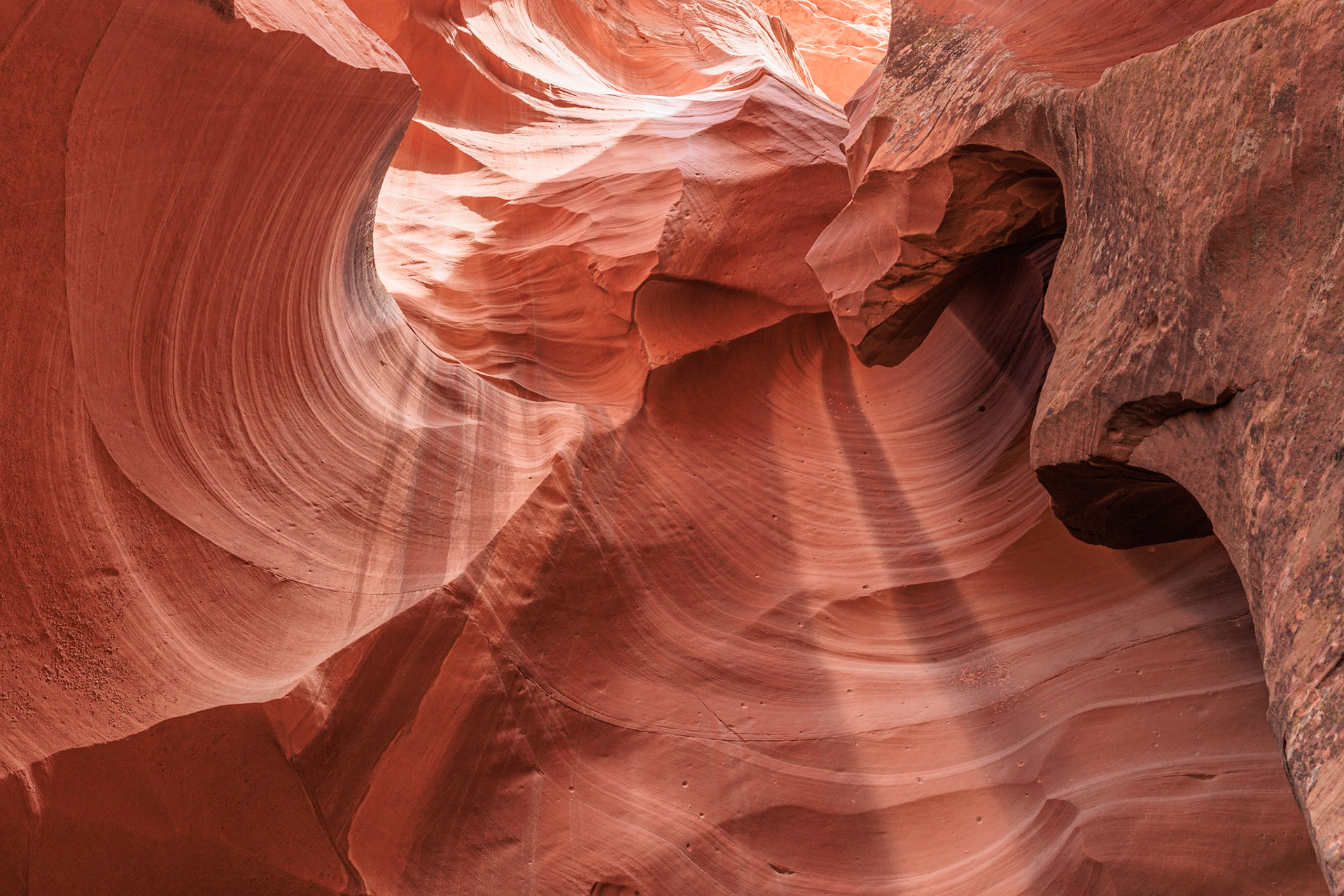
I captured this photograph inside Antelope Canyon while looking upwards at the sandstone formations. Antelope Canyon was a very special place for me because it revealed the beauty of nature through shape, texture, colour and light.
I used a 20mm focal length to include the sweeping formations on both sides of the frame. I focused on the detailed sandstone around the central curves and selected f/8 to maintain sharpness across the geological layers. The 1/125 sec shutter speed allowed me to work handheld, while ISO 400 provided sufficient sensitivity inside the canyon.
Observations
The photograph is an abstract study of natural form rather than a conventional landscape. The curved sandstone on the left creates a strong visual entrance, while the brighter central layers guide the viewer across the photograph. The rougher surface on the right contrasts with the smooth, flowing lines elsewhere and shows the variety of natural forms within the canyon.
The composition uses rhythm, pattern, natural framing and curved leading lines. The repeated layers communicate how the rock has been shaped over time. Changes between light and shadow create depth, while the terracotta, pink and brown tones give the scene warmth without hiding the differences between individual surfaces.
I paid particular attention to exposure during the final edit. The earlier version contained an excessively bright opening, so I revised the crop and recovered the highlight detail. The finished image now retains information in the brightest sandstone while preserving depth in the darker areas.
Why I chose this image
I chose this photograph because it expresses my sense of wonder at seeing Antelope Canyon. The formations appear almost sculptural and demonstrate how nature can create complex shapes through light, erosion and time. It is also clearly different from my portrait and architectural landscape.
What I would improve
If I returned to the canyon, I would bracket several exposures to give myself more control over the extreme difference between the brightest opening and the darker rock. I would also explore small changes in camera position to separate some of the overlapping formations. In the final edit, I reduced the orange intensity, protected the highlights and used a tighter composition to emphasise texture and visual flow.
EQUIPMENT USED
Canon R5
Canon RF 15-35mm F2.8L
Canon RF 15-35mm F2.8L
CAMERA SET UP
Set the Camera Mode to Manual
Set the focus length to 20mm
Set the shutter speed to 1/125s
Set the aperture to F8
Set the ISO to 400
Set the focus length to 20mm
Set the shutter speed to 1/125s
Set the aperture to F8
Set the ISO to 400